Tear Trough Filler in Doncaster
Of all the concerns patients bring to us at Elements Medical, the appearance of tired, hollow or darkened under-eyes is among the most emotionally significant — and one of the most common. The under-eye area is the first place many people look when they try to read how someone is feeling. When the tear trough is hollow and shadowed, it communicates exhaustion, stress and age regardless of how well-rested the person actually is. Patients tell us they are regularly asked if they are tired or unwell, even when they feel perfectly fine. That disconnect — between how you feel and how you look — is exactly the kind of concern tear trough filler is designed to address.
The tear trough is the groove that runs from the inner corner of the eye downward and outward along the upper cheek. In youth, this area is typically smooth and well-supported. With age — and sometimes from a younger age due to genetics — volume loss in the periorbital fat pads and the underlying bone causes the groove to deepen, the overlying skin to thin and the area to fall into shadow. Tear trough filler restores the volume that has been lost, softening the groove and lifting the shadow for a fresher, more rested and more youthful appearance.
At Elements Medical, tear trough filler is classified as an advanced procedure. It requires precise anatomical knowledge, careful patient selection and technical expertise. Not everyone is suitable, and we will always be completely honest at consultation about whether this is the right treatment for your specific concern.
Our Doncaster clinic is on Thorne Road with on-site parking. We welcome patients from across South Yorkshire, including Sheffield, Barnsley, Rotherham, Leeds and Wakefield.
What Is Tear Trough Filler?
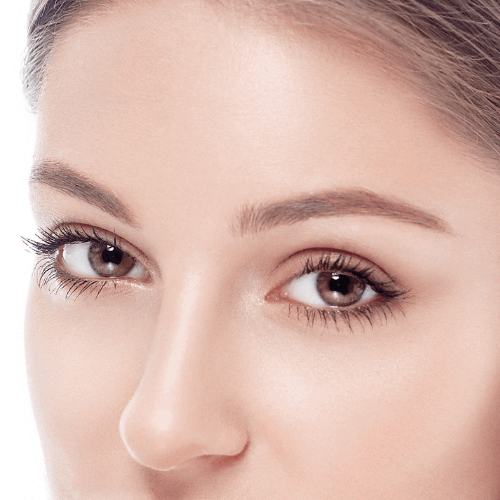
Tear trough filler — also known as under eye filler — is a non-surgical treatment in which a small amount of hyaluronic acid dermal filler is carefully placed into the tear trough area beneath the eye to restore volume, reduce hollowness and soften the dark shadow that forms in this groove.
The tear trough sits at the junction between the lower eyelid and the upper cheek. As facial volume is lost with age, the fat pads that previously supported this area reduce in size, the underlying bone structure resorbs slightly and the skin above thins considerably. The result is a visible groove that casts a shadow — creating what most people know as dark circles or hollow under-eyes.
What many people do not realise is that the dark appearance under the eye is often not caused by pigmentation or blood vessels visible through the skin — it is caused by the shadow created by the hollow itself. When filler is placed into the tear trough to restore volume and smooth the groove, the shadow lifts, light reflects evenly across the area and the dark appearance significantly reduces — even though no pigmentation has been changed.
The skin in the tear trough is the thinnest skin on the face, and the anatomy of this area is complex and variable between individuals. This is why tear trough filler is classified as an advanced treatment at Elements Medical, and why a careful suitability assessment at consultation is essential before any product is used.
The periorbital region presents unique anatomical challenges for filler treatment due to the exceptionally thin overlying skin, variable vascular anatomy and proximity to the globe. Practitioners should have specific training in this area and carry appropriate reversal agents. Source: British Journal of Dermatology
How Does Tear Trough Filler Work?
Tear trough filler works by replacing the volume that has been lost in the periorbital area, physically filling the groove and reducing the shadow it creates. Here is what to expect from your appointment at Elements Medical:
- A topical numbing cream is applied before treatment begins for your comfort throughout
- Your practitioner carries out a detailed assessment of the tear trough area, the quality and thickness of the overlying skin, the extent of hollowness and the contribution of cheek volume loss to the appearance — because often the tear trough looks worse than it is due to mid-face descent rather than primary hollowing of the trough itself
- Filler is placed with extreme precision using a fine cannula or needle into the tear trough, at the correct anatomical depth to avoid complications such as the Tyndall effect (a bluish discolouration that can occur if filler is placed too superficially in thin skin)
- The volume is carefully assessed throughout the treatment — less is more in this area, and a conservative approach always produces a more natural result
- The full appointment takes approximately 60 minutes including numbing time
- Results are visible immediately, though bruising and swelling in this delicate area can take 7 to 14 days to fully resolve. The final settled result is visible at two weeks
- A free review appointment is included at two weeks to assess the outcome and make any small refinements if needed
The volume used in tear trough treatment is typically very small — often 0.5ml or less per side — but placement precision and depth are everything in this area.
The Purpose of Tear Trough Filler Treatment
Every tear trough filler treatment at Elements Medical is guided by three clear therapeutic purposes.
Restoring a Rested, Refreshed and Youthful Appearance Under the Eyes
The under-eye area is the single most read indicator of tiredness, stress and age on the human face. When the tear trough is hollow and darkened, it creates a persistent impression of fatigue and ill health that no amount of sleep, concealer or eye cream can fully correct. Tear trough filler directly addresses the structural cause of this appearance — the volume loss that creates the shadow — and restores a smoother, more supported, fresher-looking under-eye area. The change is immediately visible and consistently described by patients as one of the most impactful improvements they have experienced.
Maintaining Healthy Periorbital Volume and Structural Support
The periorbital area changes continuously with age. As the fat pads that cushion and support the lower eyelid reduce in volume, the structural integrity of the tear trough deteriorates and the overlying skin loses its support. Maintaining appropriate volume in this area helps to preserve the smooth transition between the lower eyelid and the cheek, slow the progression of hollowing and support the delicate skin above it. In many patients, addressing the tear trough as part of a broader mid-face maintenance programme — alongside cheek filler — produces the most sustained and natural-looking result over time.
Protecting Confidence and Psychological Wellbeing
Being regularly told you look tired when you are not is a quietly exhausting experience. For patients who have lived with hollow, darkened under-eyes for years, the cumulative effect on confidence — in photographs, in professional settings, in everyday social interactions — can be significant and deeply personal. The under-eyes are one of the most scrutinised and commented-upon features of the face, and the psychological impact of restoring a fresher, more rested appearance is consistently one of the most meaningful outcomes of this treatment. Feeling comfortable making eye contact, appearing in photographs without self-consciousness and simply no longer being asked if you are tired — these are the things our patients tell us matter most.
Proven Benefits of Tear Trough Filler
Here is why tear trough filler is one of the most impactful treatments we offer at Elements Medical.
1. Reduces hollow dark circles without surgery — the volume loss that creates shadowed, darkened under-eyes is directly addressed by restoring filler to the tear trough. The shadow lifts, the groove softens and the under-eye area looks significantly more refreshed and youthful — all without any incisions or surgical recovery.
2. Creates an immediately more rested appearance — patients consistently describe the result as looking as though they have had the best night’s sleep of their life. The connection between hollow under-eyes and the perception of fatigue is so strong that softening the tear trough changes how the entire face reads to other people.
3. Improves the appearance of the whole eye area — by restoring volume to the tear trough, the transition between the lower eyelid and the upper cheek becomes smoother and more continuous. The eyes themselves look brighter, more open and more youthful, and the face appears more alive and energised overall.
4. Precise, minimally invasive treatment — the volume used in tear trough treatment is very small, the procedure is quick, and the changes produced are delicate and natural-looking. This is not a treatment that transforms the face dramatically — it is a treatment that makes it look exactly like yourself, but well-rested.
5. Immediate results with minimal downtime — results are visible from the moment treatment is complete. Bruising and swelling in this delicate area can take 7 to 14 days to fully settle, but most patients return to normal activities the following day.
6. Fully reversible — hyaluronic acid tear trough filler can be dissolved at any time using hyaluronidase if the result ever needs to be adjusted or reversed. This is particularly important in this delicate area where the margin for over-treatment is narrow.
7. Transforms daily confidence — this is the benefit our patients return to most often. No longer being asked if you are tired or unwell. Being comfortable in photographs again. Looking in the mirror and seeing a face that reflects how you actually feel. This treatment is small in scale and enormous in impact.
Am I Suitable for Tear Trough Filler?
Tear trough filler is not right for everyone, and an honest suitability assessment is the most important part of this consultation. We will always tell you if we do not think filler is the right approach for your concern — and we will suggest a better alternative if that is the case.
The ideal candidate for tear trough filler has good skin quality, reasonable skin thickness and a tear trough hollow that is primarily caused by volume loss rather than other factors. Patients with very thin or crepey skin under the eye, significant lower eyelid skin laxity, prominent under-eye bags caused by herniated orbital fat, or dark circles caused primarily by pigmentation rather than shadowing, may not be suitable candidates — or may benefit more from a different treatment approach.
During your consultation, your practitioner will assess all of these factors carefully. In some patients, addressing the mid-face volume deficit with cheek filler first — which lifts and supports the cheek and reduces the depth of the tear trough from below — produces a better and safer result than treating the tear trough directly. We will always recommend the approach that gives you the best outcome for your specific anatomy.
Tear Trough Filler vs Polynucleotides for the Under-Eye Area
Patients researching treatments for dark circles and under-eye hollowing will often encounter both tear trough filler and polynucleotides as potential options. Understanding the difference is important.
Tear trough filler uses hyaluronic acid to physically fill the hollow groove beneath the eye, replacing lost volume and reducing the shadow it creates. It is the most effective treatment for hollowness and volume-driven dark circles, producing an immediate visible improvement.
Polynucleotides for the eye area work differently. Polynucleotides are a regenerative treatment that stimulates the skin’s own collagen and elastin production, improves skin thickness and quality, and addresses the fine lines and crepiness that develop in the thin under-eye skin. They do not add volume or fill a hollow — they improve the quality of the skin above it.
The two treatments are highly complementary. Many patients with under-eye concerns benefit from both: filler to address the hollow and the shadow, and polynucleotides to improve the skin quality above. Which is more appropriate as a starting point depends on the primary concern — hollowness versus skin quality — and your practitioner will advise on the right approach during your consultation.
We also offer SuneKOS Eye and skin booster treatments for the periorbital area, which can be combined with tear trough filler for a comprehensive under-eye rejuvenation programme.
Tear Trough Filler vs Cheek Filler: What Is the Relationship?
This is one of the most important — and least understood — aspects of treating the under-eye area, and it is something we discuss at every tear trough consultation.
The tear trough and the cheek are directly connected. The tear trough groove is partly created and significantly worsened by the descent and volume loss of the mid-face below it. As the cheek flattens and descends with age, it pulls the lower eyelid downward with it, deepening the trough and extending the shadow across the upper cheek.
In many patients, restoring volume to the cheeks — lifting and supporting the mid-face from below — visibly improves the tear trough appearance without placing any filler directly under the eye at all. For patients with significant mid-face volume loss, we often recommend addressing the cheeks first and then reassessing the tear trough after four to six weeks to see how much improvement has been achieved indirectly.
For patients where direct tear trough treatment is still indicated after cheek filler, treating both areas together as part of a whole-face plan — such as the Elements Liquid Lift — almost always produces a more natural, harmonious and longer-lasting result than treating the tear trough in complete isolation.
Why Choose Elements Medical for Tear Trough Filler in Doncaster?
The tear trough is widely regarded as one of the most technically demanding areas for filler treatment. The skin here is the thinnest on the face, the anatomy is complex and variable, and the risk of complications — including the Tyndall effect, prolonged swelling or lumpiness if filler is placed incorrectly — is higher than in most other filler areas. This is not a treatment to undertake with a practitioner who lacks specific training and experience in periorbital anatomy.
At Elements Medical, tear trough filler is classified as an advanced filler treatment and is performed only by experienced practitioners with specific training in this area. We carry hyaluronidase at all times for immediate reversal. We assess every patient individually and we will decline to treat if we believe filler is not the right approach for a patient’s anatomy or concern — because giving you the right outcome matters more to us than completing a booking.
We are based on Thorne Road in Doncaster with on-site parking, and we welcome patients from across South Yorkshire including Sheffield, Barnsley, Rotherham, Leeds and Wakefield.
Read what our patients say about their experience on our Google Reviews page.






 What is tear trough filler?


Call us: 01302 34 34 32
Email us: reception@elements.org.uk
Visit our Instagram
Visit our Facebook
Visit our TikTok
Contact us on WhatsApp