Dermalux LED Light Therapy in Doncaster
LED photobiomodulation works on a principle that is both well-established in the scientific literature and genuinely intuitive: specific wavelengths of light, when delivered at the correct dose and intensity, are absorbed by specific structures within the skin and trigger a biological response that stimulates cellular repair, reduces inflammation, regulates sebum production or produces other measurable therapeutic effects depending on the wavelength used.
The Dermalux Tri-Wave MD device is clinically validated and CE-marked, and uses three distinct therapeutic wavelengths — red, blue and near-infrared — each with a different depth of skin penetration and a different primary cellular target. This tri-wave capability distinguishes Dermalux from single-wavelength LED devices and allows the device to address multiple skin concerns simultaneously or in a programmed sequence tailored to the individual patient’s presentation.
According to Dermalux’s own published clinical data, Dermalux LED encourages skin cells to regenerate up to 200% faster and can increase skin hydration by up to 600% — figures that reflect the depth and consistency of the cellular stimulation their device produces at validated clinical parameters.
Furthermore, Dermalux LED is one of the few treatments at Elements Medical that is universally appropriate regardless of skin type, Fitzpatrick classification, sensitivity level or concurrent treatment programme. It has no contraindication list that excludes the vast majority of patients, no downtime and no risk of the adverse responses that more energetic treatments carry. Consequently, it integrates naturally as an add-on or standalone treatment for almost every patient the clinic sees.
Our Doncaster clinic is on Thorne Road with on-site parking, and we welcome patients from across South Yorkshire including Rotherham, Wakefield, Sheffield, Leeds and Barnsley.
What Is Dermalux LED and How Does It Work?
Dermalux uses near-visible and near-infrared light energy delivered at specific wavelengths that are absorbed by chromophores — light-sensitive molecules — within the skin cells. This absorption triggers a photochemical reaction in the target cell that stimulates a specific biological response depending on the wavelength.
Red light — 633nm (anti-ageing and repair) Red light at 633nm penetrates to the dermis, where it is absorbed by fibroblasts and other dermal cells. The primary effect is stimulation of ATP (adenosine triphosphate) production — the energy currency of the cell — which increases fibroblast activity, collagen and elastin synthesis, and the overall regenerative capacity of the treated tissue. Consequently, a course of red light sessions produces a measurable improvement in skin firmness, fine lines and overall skin quality. Red light also has anti-inflammatory properties and supports the healing response in post-treatment skin — making it a natural complement to microneedling, laser resurfacing and injectable treatments.
Blue light — 415nm (congestion and clarity) Blue light at 415nm targets Propionibacterium acnes (now reclassified as Cutibacterium acnes) — the bacterium that drives the inflammatory response in breakout-prone skin. Blue light activates porphyrins within the bacterial cell, producing singlet oxygen that destroys the bacteria from within. Additionally, blue light has a sebum-regulating effect, reducing the oiliness that creates the environment in which congestion and breakouts flourish. This makes blue light the appropriate wavelength for congested, oily, breakout-prone skin and for patients managing the long-term appearance of acne-prone skin.
Near-infrared light — 830nm (deep cellular repair) Near-infrared at 830nm penetrates deeper into the skin than visible light wavelengths, reaching the subcutaneous tissue and stimulating mitochondrial ATP production at a deeper level. The primary applications are wound healing acceleration, reduction of post-procedure inflammation and deep anti-inflammatory activity. Near-infrared is particularly valuable as a post-treatment add-on following microneedling, laser resurfacing or any other procedure that creates a skin healing response — it accelerates the resolution of redness, reduces swelling and supports the regenerative process.
Tri-wave protocols: The Dermalux device delivers these wavelengths individually or in programmed combinations depending on the skin concern being addressed. Your practitioner selects the appropriate wavelength protocol for your skin and goals at each session.
The clinical evidence base for LED photobiomodulation — including the effects of red, blue and near-infrared wavelengths on collagen synthesis, inflammation and wound healing — is supported by peer-reviewed research. British Journal of Dermatology — photobiomodulation and LED therapy
How Is Dermalux LED Treatment Performed? Step by Step
Before treatment:
- Arrive with clean skin — remove all makeup, SPF and skincare products before your appointment
- No preparation is required; no topical anaesthetic is needed
- If having LED as an add-on to another treatment, it is typically performed immediately afterwards on freshly treated skin
During treatment:
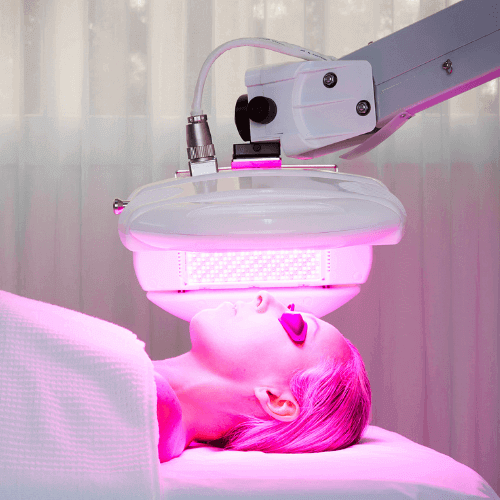
- You will be positioned comfortably beneath the Dermalux panel, which is positioned close to the face (and neck/décolletage if included)
- Protective eyewear is provided and worn throughout the session
- The LED panel delivers the selected wavelength combination for the programmed treatment time — typically 20 to 30 minutes for a full session
- The experience is entirely passive and comfortable — there is no heat, no sensation and no discomfort; most patients find it deeply relaxing
- Total appointment time is 30 to 40 minutes
After treatment:
- There is no downtime — normal activities can be resumed immediately
- The skin may look slightly brighter or more radiant immediately after treatment
- Apply SPF if going outdoors
- Avoid applying active skincare (retinoids, exfoliating acids) for a few hours if the LED was performed after another treatment; otherwise your normal routine can continue immediately
The Purpose of Dermalux LED Light Therapy
1. Restoring Skin Quality Through Clinically Validated Photobiomodulation
Dermalux LED’s primary purpose is to restore the quality, vitality and radiance of the skin through a clinically proven, non-invasive mechanism that works at the cellular level — stimulating fibroblast activity and collagen synthesis with red light, supporting skin repair and regeneration with near-infrared, and addressing the bacterial and sebaceous environment of congestion-prone skin with blue light. The Dermalux device achieves this through a validated, reproducible photobiomodulation protocol that has been tested and published in peer-reviewed research, and its effects on cellular regeneration are measurable and consistent across a course of treatments.
Maintaining Skin Health and Sustained Improvement Through a Regular LED Programme
A single Dermalux session produces an immediate brightening and calming effect, but the most significant improvements in collagen density, skin quality and inflammatory skin conditions develop across a course of sessions and are sustained through regular ongoing treatment. Consequently, a course of four sessions is the recommended starting point for patients seeking meaningful skin quality improvement, with regular maintenance sessions — whether standalone or as add-ons to other treatments — sustaining the benefits over time.
Protecting the Skin During and After Other Treatments Through LED’s Unique Repair and Recovery Support Function
One of Dermalux LED’s most clinically valuable applications at Elements Medical is its role as a post-treatment recovery support tool. Applied immediately after microneedling, laser resurfacing, chemical peels or injectable treatments, the near-infrared and red wavelengths actively support the skin’s healing response — reducing post-procedure redness, calming inflammation and accelerating the resolution of the treatment response. At just £10 as an add-on, it is one of the most cost-effective upgrades available in the clinic and is recommended after virtually any treatment that creates a temporary skin response.
Proven Benefits of Dermalux LED Light Therapy
1. Three clinically distinct wavelengths address multiple skin concerns in a single session Red (633nm) for collagen stimulation and repair, blue (415nm) for congestion and bacteria control, near-infrared (830nm) for deep cellular repair — each wavelength targets a different biological response, giving Dermalux a breadth of clinical application unmatched by single-wavelength LED devices.
2. Clinically validated photobiomodulation with published evidence Dermalux is the UK’s leading clinically proven LED device, with a CE mark and an evidence base from peer-reviewed research supporting its mechanism and efficacy — not a cosmetic light panel but a medical-grade phototherapy device.
3. Stimulates collagen and elastin production for progressive skin quality improvement Red light’s stimulation of fibroblast activity and ATP production drives new collagen and elastin synthesis across a course of sessions, producing a measurable improvement in skin firmness, fine lines and overall skin quality.
4. Zero downtime and no discomfort — suitable for all skin types Dermalux LED is entirely non-invasive, requires no topical anaesthetic and produces no discomfort or post-treatment response. It is appropriate for every skin type and Fitzpatrick classification and can be used on sensitised or post-procedure skin without risk.
5. Accelerates recovery after other treatments when used as an add-on Applied at £10 as an add-on after microneedling, laser resurfacing, chemical peels or injectables, Dermalux LED’s near-infrared and red wavelengths actively reduce post-treatment redness and inflammation and support faster resolution of the treatment response.
6. Calms inflammation and supports the skin barrier in sensitive and redness-prone skin The anti-inflammatory properties of both red and near-infrared light are well documented — making Dermalux LED a consistently beneficial treatment for patients with chronically sensitised, reactive or redness-prone skin who benefit from regular anti-inflammatory light therapy alongside their skincare routine.
7. Exceptional value — £30 standalone or £10 as an add-on to any treatment At £30 per single session or £100 for a course of four, and just £10 added to any existing treatment, Dermalux LED is among the most accessible and cost-effective clinical skin treatments available — and one of the most universally beneficial.
What Can Dermalux LED Address?
Collagen Loss, Fine Lines and Skin Ageing
Red light’s stimulation of fibroblast activity and collagen synthesis addresses the progressive structural decline that creates fine lines, loss of firmness and the dull, thinning quality of ageing skin. A course of Dermalux red light sessions — or regular LED sessions as an add-on to other anti-ageing treatments — produces a progressive improvement in skin firmness and the fine-line quality of the treated skin.
Congested, Breakout-Prone Skin
Blue light at 415nm targets the bacteria responsible for driving the inflammatory response in breakout-prone skin, while also helping to regulate sebum production. A course of blue-light sessions, combined with an appropriate home skincare routine, addresses the bacterial and sebaceous environment that sustains congestion over time.
Dull, Dehydrated and Lacklustre Skin
Red light’s stimulation of cellular metabolism and ATP production restores the energetic capacity of skin cells — improving their ability to hydrate, repair and renew. Dermalux’s published data attributes an increase in skin hydration of up to 600% to its LED protocol, reflecting a genuine improvement in the cellular conditions that sustain healthy skin hydration.
Redness-Prone and Inflammatory Skin
The anti-inflammatory properties of red and near-infrared light make regular Dermalux LED sessions a consistently supportive treatment for patients with sensitised, reactive or chronically red skin. The light energy calms the inflammatory signalling that drives redness and irritation, progressively improving the skin’s baseline inflammatory status with regular treatment.
Post-Procedure Recovery
Near-infrared light’s ability to accelerate wound healing and reduce post-treatment inflammation makes Dermalux LED the natural complement to any treatment that creates a healing response in the skin — microneedling, laser resurfacing, chemical peels, injectables. Applied immediately post-procedure at just £10, it consistently reduces recovery time and supports a better healing outcome.
Sun Damage and Uneven Radiance
Red light’s improvement of cellular metabolism and collagen synthesis, combined with its anti-inflammatory effect, progressively improves the appearance of sun-damaged skin — restoring a more even, radiant and structurally supported skin quality over a course of sessions.
Dermalux LED vs At-Home LED Devices — Why Clinical Grade Matters
The consumer LED device market has grown substantially in recent years, and patients frequently ask whether clinical Dermalux treatment is meaningfully different from the LED masks and panels available for home use. The answer lies in the irradiance — the power output — and the clinical validation.
The Dermalux Tri-Wave MD delivers light at a therapeutic irradiance calibrated to produce the photobiomodulation responses described in the clinical literature. Most consumer devices operate at a fraction of this power output — producing insufficient irradiance at the skin surface to trigger the cellular responses that make clinical LED effective. Consumer devices may produce some benefit with very regular use, but the depth, consistency and clinical significance of the response does not compare to a validated medical-grade device.
Furthermore, the tri-wave capability of the Dermalux — with its ability to combine or sequence three distinct therapeutic wavelengths in a programmed protocol — is not replicated by the vast majority of consumer devices, which typically offer only one or two wavelengths at sub-therapeutic intensities.
Why Choose Elements Medical for Dermalux LED in Doncaster?
At Elements Medical, Dermalux LED is used both as a standalone treatment and as an integrated component of the broader treatment programme — applied as a post-procedure add-on after microneedling, laser resurfacing or chemical peels, or as a regular standalone session within a skin maintenance programme. The wavelength protocol is selected for each patient’s skin and goals at every session.
Dermalux LED combines effectively with virtually every treatment in the Elements Medical range — microneedling, DermaQuest peels, HydraFacial, dermaplaning and all injectable and regenerative treatments. At £10 as an add-on, it is one of the easiest and most universally beneficial upgrades available.
Read what our patients say on our Google Reviews page.





 What is Dermalux LED light therapy and how does it work?


Call us: 01302 34 34 32
Email us: reception@elements.org.uk
Visit our Instagram
Visit our Facebook
Visit our TikTok
Contact us on WhatsApp