




 What is dermaplaning?
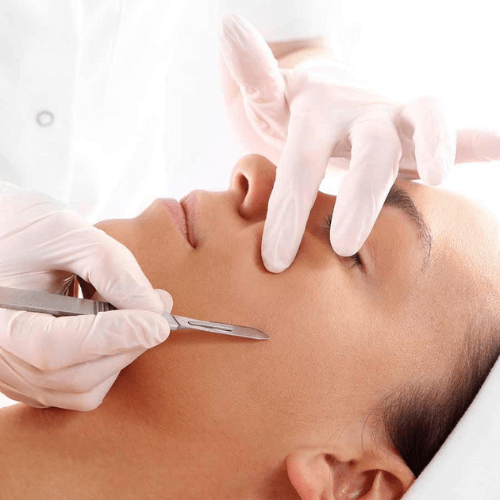
Dermaplaning is a professional facial exfoliation treatment that uses a sterile surgical-grade blade to gently remove dead skin cells and fine vellus hair, commonly called peach fuzz.
The blade is passed across the skin using short, controlled movements, helping reveal a smoother and brighter-looking complexion. The treatment is performed on suitable areas of the face, avoiding sensitive or unsuitable skin lesions.
Dermaplaning provides surface exfoliation rather than deep skin resurfacing, making it particularly appealing for patients wanting an immediate improvement in skin smoothness.
What are the benefits of dermaplaning? Dermaplaning can immediately improve skin smoothness, reduce visible peach fuzz and enhance the appearance of a dull or uneven complexion.
Removing surface dead skin cells creates a more even texture, while removing fine facial hair allows makeup to sit more smoothly against the skin.
It may also make the application of skincare products feel more even, although increased absorption does not automatically mean better clinical results. Dermaplaning is particularly suited to patients seeking a refreshed appearance without significant downtime.
Will facial hair grow back thicker? No. Dermaplaning does not cause facial hair to grow back thicker, darker or faster.
The treatment removes fine vellus hair at the skin’s surface without changing the follicle responsible for producing it. Hair thickness, colour and growth patterns are determined by the follicle and are not permanently altered by dermaplaning.
As the hair grows back, its blunt-cut tip may temporarily feel slightly different, but it will retain its natural characteristics. Hormonal changes can independently affect facial hair growth.
How long do dermaplaning results last? Dermaplaning results generally last around three to four weeks, although this varies according to your natural skin renewal and facial hair growth.
The initial smoothness is often noticeable immediately, but dead skin cells gradually accumulate again and fine facial hair naturally regrows.
Some patients choose monthly appointments to maintain the appearance of smoother, brighter skin. Regular treatment is optional, and the frequency should be adjusted according to skin sensitivity and individual needs.
Does dermaplaning hurt? Dermaplaning is generally comfortable, with most patients describing a light scraping or brushing sensation across the skin.
The sterile blade is carefully moved over the skin’s surface to remove dead cells and fine facial hair. No injections or anaesthetic are normally required.
However, temporary sensitivity or mild irritation can occur, and small cuts are possible. Your practitioner will assess your skin before treatment and adjust the technique or avoid areas where dermaplaning is unsuitable.
Is there downtime after dermaplaning? Dermaplaning usually involves minimal downtime, and most patients can return to their normal activities immediately after treatment.
Temporary pinkness, dryness, tenderness or sensitivity may occur, particularly if your skin is naturally reactive. These effects generally improve within a day or two, although irritation can occasionally last longer.
We recommend using gentle skincare and daily sun protection while the skin settles. Allow a few days before important events if you have not previously experienced dermaplaning.
Can dermaplaning help acne? Dermaplaning may improve surface roughness and dullness in patients with a history of acne, but it is not a primary treatment for active acne.
It should generally be avoided over inflamed spots, pustules or broken skin because the blade can increase irritation and potentially spread infection.
For patients experiencing persistent breakouts or congestion, treatments such as HydraFacial or a personalised skincare programme may be more appropriate. Your practitioner will assess your skin before recommending treatment.
Is dermaplaning suitable for sensitive skin? Dermaplaning may be suitable for some patients with sensitive skin, but it is not appropriate for everyone.
Although the treatment does not use chemical exfoliants, the blade physically exfoliates the skin and can cause irritation. Patients with active eczema, rosacea flare-ups, sunburn, broken skin or a compromised skin barrier may need to postpone treatment.
At Elements Medical, your practitioner will assess your skin condition and sensitivity before deciding whether dermaplaning is suitable.
Can I wear makeup after dermaplaning? We recommend avoiding makeup for approximately 24 hours after dermaplaning to allow the freshly exfoliated skin to settle.
Once any redness or sensitivity has resolved, makeup often applies more smoothly because the fine facial hair and surface dead skin cells have been removed.
Use clean makeup brushes and gentle products when returning to your usual routine. If your skin remains irritated, allow additional recovery time before applying cosmetics.
What should I avoid after dermaplaning? For approximately 48 hours after dermaplaning, avoid harsh exfoliants, retinoids, strong acids and other skincare ingredients that may irritate freshly treated skin.
It is also sensible to avoid excessive heat, saunas, vigorous exercise and unnecessary friction while any sensitivity settles.
Use a gentle cleanser, suitable moisturiser and broad-spectrum SPF 30 or higher. Avoid excessive sun exposure, and follow the specific aftercare instructions provided by your practitioner.
If you develop persistent irritation, increasing redness or signs of infection, contact Elements Medical for advice.
Who should avoid dermaplaning? Dermaplaning should generally be avoided over active inflammatory acne, cold sores, infected skin, open wounds, sunburn or active eczema and rosacea flare-ups.
Recent chemical peels, laser treatments, strong exfoliating skincare or certain medications may also make the skin temporarily unsuitable. Patients with fragile skin, impaired healing or a tendency towards scarring may require additional assessment.
Inform your practitioner about relevant medical conditions, prescribed skincare and recent aesthetic procedures before treatment. Dermaplaning should never be carried out over suspicious or unidentified skin lesions.
What are the risks of dermaplaning? Dermaplaning is generally well tolerated, but possible side effects include temporary redness, tenderness, dryness and irritation.
Because the treatment involves a blade, small cuts or abrasions can occur. Less common complications include infection, post-inflammatory pigmentation changes and scarring.
These risks can be reduced through appropriate skin assessment, professional technique, sterile single-use blades and careful aftercare, although they cannot be eliminated entirely.
Further information is available in the Cleveland Clinic dermaplaning guide.
Dermaplaning vs HydraFacial? Dermaplaning and HydraFacial both aim to improve skin appearance, but they use different exfoliation techniques.
Dermaplaning uses a sterile blade to remove fine facial hair and surface dead skin cells, making it particularly suitable for improving smoothness and makeup application.
HydraFacial uses a specialist device for exfoliation, cleansing, extraction and hydration, making it an alternative for patients whose main concerns include congestion and dehydration.
Neither treatment is universally better. The most suitable option depends on your skin condition and desired results.
Can dermaplaning be combined with other facials? Yes, dermaplaning can complement selected facial treatments where your skin is suitable for combined exfoliation.
At Elements Medical, it may be combined with Dermalux LED Light Therapy or incorporated into a personalised facial programme.
Other treatments, including HydraFacial and chemical peels, may require adjustments or separate appointments to avoid excessive exfoliation and irritation.
Your practitioner will recommend suitable combinations based on your skin sensitivity, treatment history and goals.

Call us: 01302 34 34 32
Email us: reception@elements.org.uk
Visit our Instagram
Visit our Facebook
Visit our TikTok
Contact us on WhatsApp