





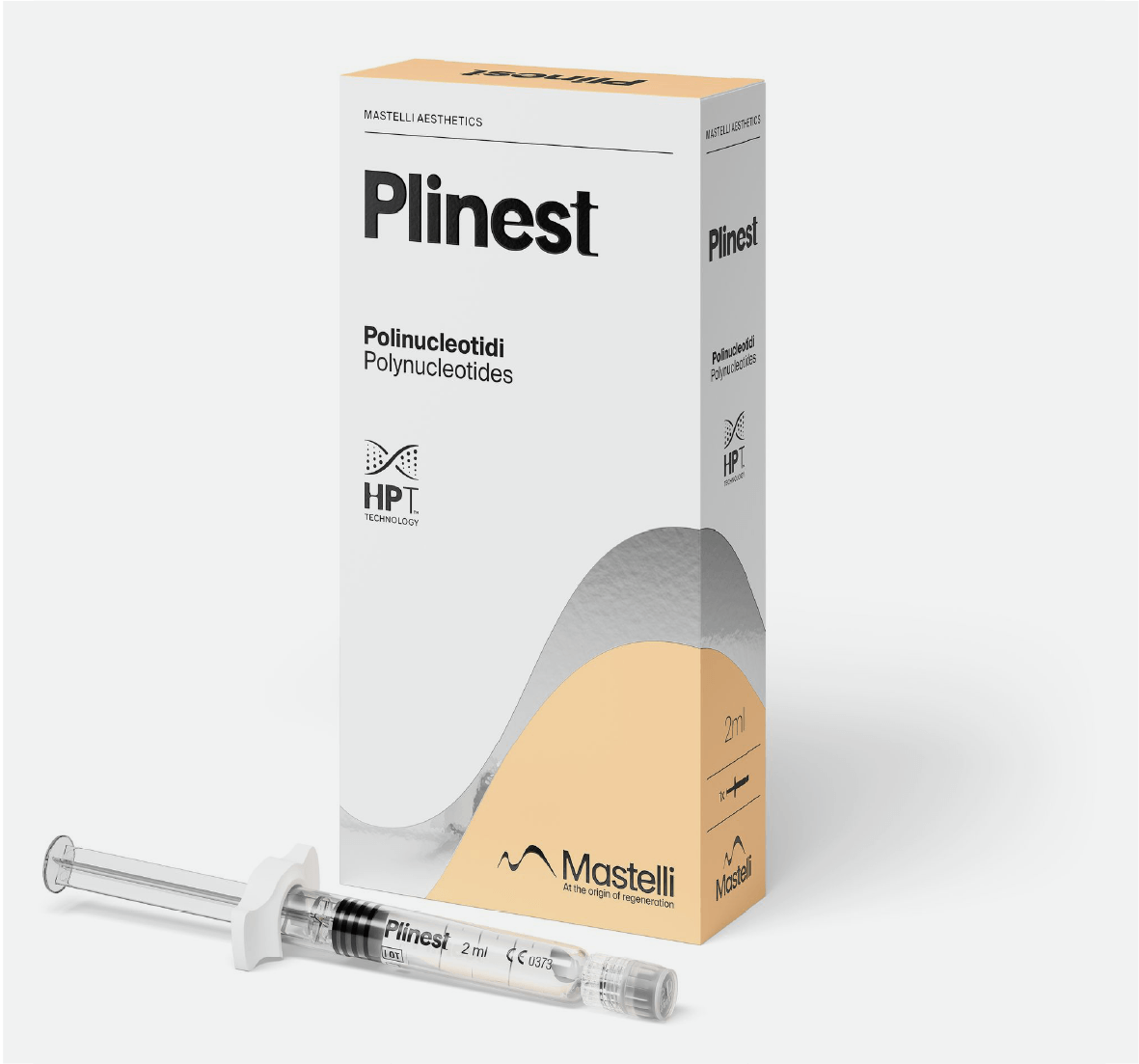
Polynucleotide Eye treatment uses highly purified DNA fragments to support the skin’s natural repair and remodelling processes. At Elements Medical, we use Plinest Eye by Mastelli, containing 0.75% Polynucleotides HPT (15 mg in 2 ml), specifically formulated for the delicate periocular area. These molecules are thought to support fibroblast activity and processes involved in collagen production, helping improve skin quality without traditional volumising fillers.
Mastelli
Polynucleotide injections may help soften fine lines, improve crepey under-eye skin, enhance hydration and elasticity, and reduce the appearance of certain dark circles. Improvements develop gradually as the skin responds to treatment, giving the eye area a smoother, fresher and more rested appearance.
At our nurse-led clinic in Doncaster, we tailor treatment to the cause of your concerns. Alternatives include SuneKOS Eye and LaseMD Eye. Learn more about the formulation on the official Mastelli Plinest Eye website.


 What are Polynucleotide Eye injections?
Polynucleotide Eye injections are an injectable skin rejuvenation treatment using purified DNA fragments to support skin quality and natural tissue repair processes around the eyes.
At Elements Medical, we use Plinest Eye by Mastelli, containing 0.75% Polynucleotides HPT (15 mg per 2 ml). The formulation is designed for the delicate periocular area and aims to improve hydration, firmness, elasticity and overall skin condition.
Polynucleotides are thought to influence fibroblast activity and collagen-related processes, although research into their exact mechanisms and long-term effects is continuing.
Can polynucleotides improve dark circles? Polynucleotide Eye treatment may improve certain types of dark circles, particularly where thin, ageing skin contributes to the visibility of underlying blood vessels.
Dark circles can also result from pigmentation, genetics, allergies, fluid retention or shadows caused by under-eye hollowing. Polynucleotides do not directly correct every cause, so results vary considerably.
At Elements Medical, we assess the underlying cause of your dark circles before recommending treatment. Other options may be more appropriate where pigmentation or structural hollowing is the main concern.
Can polynucleotides improve hollow eyes? Polynucleotides may improve the appearance of mild under-eye hollowing where poor skin quality contributes to a tired or shadowed appearance, but they do not replace lost fat or provide significant volume.
True tear trough hollowing is often caused by facial anatomy, age-related volume loss or changes in the position of underlying tissues.
Where structural hollowing is the main concern, tear trough filler or another specialist treatment may be more appropriate. Your practitioner will assess the risks and suitability of each option.
Can polynucleotides improve crepey eyes? Yes, polynucleotide injections may help improve the appearance of crepey under-eye skin, particularly where fine lines, reduced elasticity and dehydration are present.
Crepey skin often develops as collagen, elastin and moisture levels decline with age, leaving the delicate eye area looking thin and finely wrinkled.
Polynucleotides aim to support skin quality and tissue remodelling, potentially improving texture and suppleness over a course of treatments. More pronounced wrinkles or excess eyelid skin may require a different approach, such as laser resurfacing.
How many Polynucleotide Eye sessions will I need? At Elements Medical, we generally recommend a course of four Polynucleotide Eye treatments, usually spaced approximately four weeks apart, depending on the product protocol and your individual needs.
Mastelli’s published Plinest Eye guidance describes three to four sessions at intervals of 14–21 days. Your practitioner will recommend an appropriate schedule based on your skin condition, treatment goals and current product guidance.
Maintenance sessions may be considered following assessment, although there is no universally established schedule that guarantees the best results.
What is the difference between 1 ml and 2 ml? The difference between 1 ml and 2 ml of Polynucleotide Eye treatment is the amount of product used and the extent of the area being treated.
A 1 ml treatment may be appropriate for more localised concerns, while 2 ml may allow broader treatment of the eye area where clinically indicated.
More product does not automatically mean better results. Your practitioner will assess your anatomy, skin condition and treatment goals to determine the appropriate volume and injection technique.
When will I see Polynucleotide Eye results? Some patients begin noticing subtle improvements in under-eye hydration, texture or fine lines within approximately four weeks of their first polynucleotide treatment.
Changes may continue to develop over subsequent sessions as the skin responds to treatment. Improvements are generally gradual rather than immediate, and the extent of the response varies between individuals.
Final results are usually assessed several weeks after completing the recommended course, once any treatment-related swelling has settled.
How long do Polynucleotide Eye results last? Polynucleotide Eye results are temporary, with improvements in skin texture and fine lines potentially remaining noticeable for several months after treatment.
Clinical research has reported improvements in certain periorbital skin concerns during follow-up periods of up to approximately six months. However, longer-term results are not yet well established, and findings vary between formulations and studies.
Maintenance treatments may help sustain improvements, but the appropriate frequency depends on your skin condition, response and individual treatment goals.
Are Polynucleotide Eye injections painful? Polynucleotide Eye injections may cause brief stinging, pinching or pressure, although most patients find the discomfort manageable.
At Elements Medical, topical numbing cream may be applied beforehand to help improve comfort. The treatment involves a series of small injections using a fine needle, with the technique selected according to your anatomy and treatment area.
The skin around the eyes is particularly sensitive, so some tenderness may remain afterwards. Your practitioner will explain what to expect before treatment.
Is there downtime after Polynucleotide Eye? Polynucleotide Eye treatment usually involves relatively little downtime, although visible swelling, bruising and small raised bumps around the injection sites are common.
The small bumps, sometimes called papules, may take approximately 24–96 hours to settle. Bruising or swelling can occasionally last longer, particularly in the delicate under-eye area.
Many patients return to normal daily activities shortly after treatment, but we recommend allowing several days before important events. Recovery varies between individuals and cannot be guaranteed within a specific timeframe.
What are the risks of Polynucleotide Eye? Common side effects include temporary redness, swelling, bruising, tenderness and small raised areas at the injection sites.
Less common complications include infection, allergic reactions, persistent inflammation and nodules. The delicate anatomy around the eyes requires particular care, and serious injection-related complications, including vascular injury and visual impairment, are possible even though they are rare.
Seek urgent medical assessment if you experience severe or increasing pain, unusual skin discolouration, significant eye pain or any changes to your vision following treatment.
Who should avoid Polynucleotide Eye? Polynucleotide Eye treatment is generally unsuitable during pregnancy or breastfeeding, for patients with an active infection in the treatment area, or for anyone with a known allergy to the product’s ingredients.
Plinest products contain highly purified polynucleotides derived from fish, so any fish allergy must be discussed before treatment. Certain autoimmune or inflammatory conditions, bleeding disorders, medicines and previous eye procedures may also affect suitability.
Your practitioner will review your medical history, previous aesthetic treatments and individual risk factors before confirming whether treatment is appropriate.
What should I avoid after Polynucleotide Eye? After Polynucleotide Eye treatment, avoid rubbing, massaging or applying unnecessary pressure to the treated area unless specifically instructed by your practitioner.
You may be advised to avoid eye makeup for approximately 24 hours, and strenuous exercise, alcohol, saunas, steam rooms and excessive heat for 24–48 hours. Avoid irritating skincare ingredients until the skin has settled.
Before treatment, inform your practitioner about medicines, supplements, allergies and recent procedures. Do not stop prescribed medication without medical advice.
Follow your personalised aftercare instructions and contact Elements Medical if you develop worsening swelling, increasing pain or unexpected symptoms.
Polynucleotide Eye vs tear trough filler? Polynucleotide Eye treatment and tear trough filler address different concerns around the eyes.
Polynucleotides are primarily used to improve skin quality, texture, hydration and fine lines. Tear trough filler uses hyaluronic acid to replace volume in carefully selected patients with structural under-eye hollowing.
Filler can create a more immediate change in contour, but it carries particular risks around the eyes, including persistent swelling and rare vascular complications. Neither treatment is suitable for everyone, and they should not be considered interchangeable.
Polynucleotide Eye vs SuneKOS Eye? Both treatments aim to improve delicate under-eye skin, but they contain different ingredients.
Polynucleotide Eye treatment uses purified DNA fragments intended to support tissue repair and skin remodelling. SuneKOS Eye combines hyaluronic acid with amino acids involved in collagen and elastin synthesis, with an additional focus on hydration.
Both may improve fine lines, crepey texture and skin elasticity. Direct comparative evidence remains limited, so your practitioner will recommend the most appropriate option based on your individual skin concerns.
Can Polynucleotide Eye be combined? Yes, Polynucleotide Eye treatment may be combined with other eye rejuvenation procedures where clinically appropriate.
For example, LaseMD Eye and CO₂ Eye use different forms of laser resurfacing to address wrinkles and skin texture, while SuneKOS Eye offers an alternative injectable approach.
These procedures may need to be scheduled separately to allow sufficient healing. Combining treatments does not automatically guarantee better results, and the timing will depend on your skin condition and treatment plan.
What Polynucleotide Eye product do we use? At Elements Medical, we use Plinest Eye by Mastelli, an Italian manufacturer specialising in polynucleotide-based regenerative medical products.
Plinest Eye contains 0.75% highly purified Polynucleotides HPT, equivalent to 15 mg in a 2 ml syringe. It is specifically formulated for the delicate skin around the eyes and is intended to improve hydration, firmness and elasticity.
For further details about the formulation and treatment guidance, visit the official Mastelli Plinest Eye website.
You can also read a 2026 systematic review of polynucleotide eye rejuvenation. The evidence is encouraging for some wrinkles and skin-quality concerns, but larger and longer-term studies are needed.



Call us: 01302 34 34 32
Email us: reception@elements.org.uk
Visit our Instagram
Visit our Facebook
Visit our TikTok
Contact us on WhatsApp