




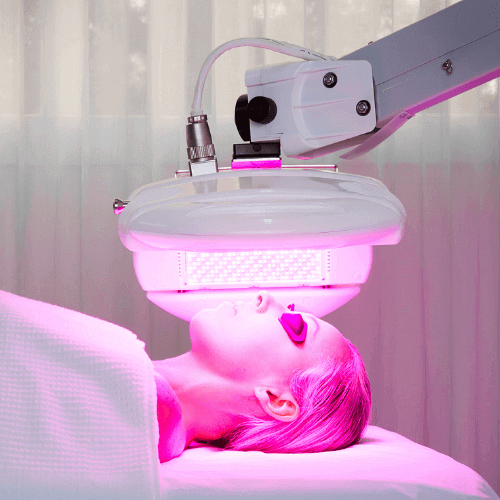

 What is Dermalux LED Light Therapy?
Dermalux LED Light Therapy is a non-invasive skin treatment that uses specific wavelengths of light to influence biological processes within the skin. This is known as photobiomodulation.
Unlike lasers and IPL, Dermalux does not rely on controlled thermal injury to resurface the skin. Instead, light energy is absorbed by cellular components, influencing processes involved in inflammation, tissue repair and skin rejuvenation.
At Elements Medical, we use the medical-grade Dermalux Flex MD, which combines blue, red and near-infrared wavelengths to address different skin concerns.
What are the benefits of Dermalux LED? Dermalux LED Light Therapy offers several potential benefits, including improvements in skin radiance, texture, fine lines, blemishes and visible redness.
Its different wavelengths can target acne-related bacteria, support collagen-related skin processes and help calm inflammation. Red and near-infrared light are also used to support normal tissue repair, making Dermalux a useful addition to selected aesthetic treatments.
Results vary according to the skin concern, wavelength combination and number of sessions. Some benefits are supported by stronger clinical evidence than others.
What do the three Dermalux colours do? Dermalux Flex MD uses three wavelengths, each selected for a different purpose.
Blue light (415 nm): Targets Cutibacterium acnes, bacteria associated with inflammatory acne, helping reduce certain types of breakouts.
Red light (633 nm): Supports skin rejuvenation, helping improve the appearance of fine lines, texture and radiance through processes associated with cellular activity and collagen production.
Near-infrared light (830 nm): Supports tissue repair and helps regulate inflammation, making it particularly relevant for selected skin recovery protocols.
These wavelengths can be used individually or in combinations according to your skin concerns and the manufacturer’s treatment guidance.
Can Dermalux LED help acne? Yes, Dermalux LED can help manage certain types of acne, particularly mild to moderate inflammatory breakouts.
Blue light at 415 nm acts on compounds produced by acne-associated bacteria, generating a reaction that can reduce bacterial activity. Red light may also help calm inflammation associated with spots.
Dermalux may be used as a standalone treatment or alongside an appropriate skincare programme. However, severe, scarring or persistent acne may require prescription treatment or medical assessment.
For suitable patients, we also offer IPL Acne Treatment, which uses a different light-based approach.
Can Dermalux reduce wrinkles? Red and near-infrared LED light may help improve the appearance of fine lines, skin texture and early signs of ageing.
Photobiomodulation can influence cellular processes associated with fibroblast activity and collagen production. Clinical studies of LED phototherapy have reported improvements in certain measures of skin quality, although results are usually gradual and relatively subtle.
Dermalux is not designed to correct deep wrinkles, significant skin laxity or substantial facial volume loss. More intensive treatments may be appropriate where these are the primary concerns.
Can Dermalux calm redness and rosacea? Dermalux red and near-infrared light may help calm certain forms of skin inflammation and reduce the appearance of temporary redness.
It can be considered as a supportive treatment for some patients with sensitive or redness-prone skin, including selected patients with rosacea. However, evidence specifically supporting LED treatment for rosacea remains limited.
Dermalux does not reliably remove visible facial thread veins or permanently correct rosacea. For persistent vascular redness, our IPL Rosacea Treatment may be more suitable following clinical assessment.
Does Dermalux speed up skin recovery? Dermalux red and near-infrared light may support skin recovery by influencing processes involved in inflammation and tissue repair.
Photobiomodulation has been investigated for wound healing and post-procedure recovery, with encouraging findings in some clinical settings. However, the extent to which Dermalux shortens recovery after a particular aesthetic procedure is not firmly established.
At Elements Medical, we may recommend Dermalux following selected treatments to support skin comfort and normal healing. The timing and wavelength protocol are chosen according to the procedure and condition of your skin.
How many Dermalux sessions will I need? The number of Dermalux treatments depends on your skin concerns and whether LED is being used for rejuvenation, acne management or recovery support.
At Elements Medical, we offer a course of four sessions as an accessible starting point. However, concerns such as inflammatory acne may benefit from a more intensive programme involving several treatments per week over a longer period.
Some patients also choose occasional maintenance sessions or add Dermalux to other aesthetic treatments. Your practitioner will recommend a suitable programme based on your individual response.
When will I see Dermalux results? Some patients notice their skin looking calmer or more radiant shortly after Dermalux LED treatment, although immediate changes are usually subtle.
Improvements in acne, fine lines and overall skin quality generally require repeated sessions over several weeks. The response depends on the wavelength programme, treatment frequency and underlying concern.
LED phototherapy produces cumulative effects rather than the dramatic changes associated with more intensive procedures. Your practitioner will review progress and advise whether further treatments may be beneficial.
How long do Dermalux results last? Dermalux results vary in duration depending on the concern being treated and the number of sessions completed.
Improvements in skin appearance may be temporary, while changes in acne activity or inflammation depend on the underlying condition and ongoing skincare. Natural skin ageing also continues after treatment.
Regular maintenance sessions may help preserve certain improvements, but there is no guaranteed duration or universally recommended maintenance schedule for every patient.
Is Dermalux LED painful? No, Dermalux LED Light Therapy is generally comfortable and does not involve needles, skin penetration or the intense heat associated with some laser treatments.
During treatment, you relax beneath the LED panel while the selected wavelengths are delivered to your skin. You may notice a gentle feeling of warmth, although many patients experience very little sensation.
No anaesthetic is required. Protective eyewear is worn during facial treatments, and the session can be a relaxing part of your skincare routine.
Is there downtime after Dermalux LED? Dermalux LED usually involves no significant downtime, and most patients can return to their normal activities immediately after treatment.
The procedure does not deliberately damage or remove the skin surface. Temporary warmth, mild redness or sensitivity can occasionally occur, although these effects are generally short-lived.
If Dermalux is performed after microneedling, laser resurfacing or another aesthetic procedure, any downtime and aftercare restrictions associated with that treatment will still apply.
Can Dermalux be combined with other treatments? Yes, Dermalux LED can complement many aesthetic procedures, particularly where supporting skin comfort and recovery is part of the treatment plan.
At Elements Medical, it may be offered alongside microneedling, HydraFacial and selected laser treatments, including CO₂ laser resurfacing.
However, the most appropriate timing depends on the condition of your skin. Dermalux should not automatically be applied to every patient or immediately after every procedure, particularly where skin injury, infection or specific contraindications are present.
Dermalux vs home LED masks? Dermalux Flex MD is a professional LED phototherapy device designed for both clinical and home use. It offers specific wavelengths, adjustable treatment programmes and a large flexible panel for the face and body.
Consumer LED masks vary considerably in wavelength accuracy, light intensity, treatment coverage and supporting clinical evidence. Some home devices can also produce beneficial results when used consistently.
The main advantage of an Elements Medical appointment is professional assessment, appropriate wavelength selection and integration with your wider skin treatment plan, rather than simply assuming that all home devices are ineffective.
Is Dermalux safe for everyone? Dermalux LED is suitable for many skin types and is generally well tolerated, but it is not appropriate for everyone.
Patients with photosensitive conditions, light-triggered epilepsy, certain eye conditions or medications that increase sensitivity to light may require additional assessment or may be unsuitable. Pregnancy and other medical circumstances should also be reviewed against the manufacturer’s guidance.
Possible side effects include temporary redness, warmth, irritation or discomfort. Eye protection is important, particularly during facial treatment. Your practitioner will review your medical history and treatment suitability before proceeding.
What happens during Dermalux treatment? Your Dermalux appointment begins with a brief assessment of your skin concerns and the selection of an appropriate light treatment programme.
The skin should be clean and free from makeup, SPF and other products that may interfere with light delivery. You will relax comfortably beneath the LED panel with protective eyewear in place.
A typical session lasts approximately 20–30 minutes, depending on the selected protocol. Afterwards, you can usually resume your normal skincare and activities immediately, unless Dermalux has been combined with another treatment requiring specific aftercare.
What Dermalux device does Elements use? At Elements Medical, we use the Dermalux Flex MD, a British-made Class IIa medical device designed for professional LED phototherapy.
It delivers blue light at 415 nm, red light at 633 nm and near-infrared light at 830 nm. Different wavelength combinations can be selected to address concerns including acne, visible skin ageing and recovery support.
For further independent information about the clinical evidence for LED treatments, you can read a systematic review of LED therapy in dermatology. This evaluates LED treatments more broadly rather than proving that every Dermalux protocol produces the same outcome.



Call us: 01302 34 34 32
Email us: reception@elements.org.uk
Visit our Instagram
Visit our Facebook
Visit our TikTok
Contact us on WhatsApp