CO2 Laser Skin Resurfacing in Doncaster
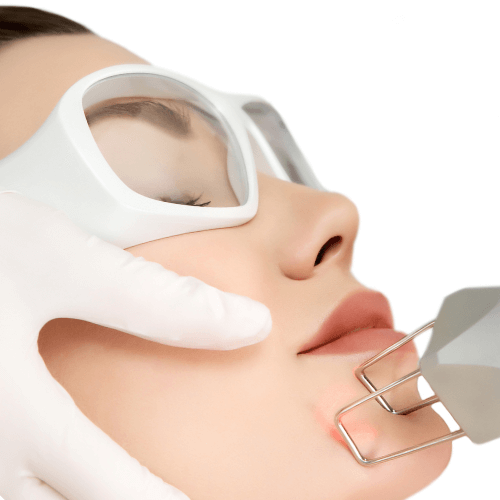
There is a significant difference between the range of treatments that improve skin quality and the treatments that genuinely resurface it. Skin boosters, polynucleotides, PRF and even radiofrequency microneedling all stimulate collagen and improve skin quality from within — but they work progressively and leave the existing skin structure largely intact. CO2 fractional laser resurfacing removes that structure and rebuilds it. The laser ablates damaged skin tissue in a controlled pattern, destroying the old and triggering the body to replace it with new collagen, new elastin and new, structurally sound skin architecture. The improvement is not incremental — it is resurfacing in the truest sense of the word.
At Elements Medical we offer CO2 laser treatment for the full face, the eye area and the mouth area, allowing either comprehensive facial resurfacing or targeted treatment of the zones most commonly affected by deep wrinkles, fine lines and textural ageing. A mandatory consultation is required before any CO2 treatment, during which we assess your skin type, discuss the severity and pattern of your concerns, agree the appropriate treatment parameters and set clear, honest expectations for both results and recovery.
Our Doncaster clinic is on Thorne Road with on-site parking, and we welcome patients from across South Yorkshire including Rotherham, Wakefield, Sheffield, Leeds and Barnsley.
What Is CO2 Fractional Laser Resurfacing?
CO2 (carbon dioxide) laser resurfacing is an ablative laser treatment — meaning it removes layers of skin tissue rather than passing through the skin without ablation, as non-ablative lasers such as LaseMD do.
The “fractional” element refers to the delivery method. Rather than treating the entire surface of the skin uniformly, the fractional laser fires a precise grid of microscopic laser columns — known as microthermal treatment zones — into the skin. Each column delivers high-intensity ablative energy that vaporises the tissue in its path and creates a zone of thermal damage extending deeper into the dermis. The tissue between these columns is left entirely intact.
This fractional approach is what makes modern CO2 laser treatment both highly effective and manageable in terms of recovery. The ablated columns are destroyed and replaced; the intact tissue between them serves as a reservoir of healthy cells that accelerates healing and supports the regeneration of the treated areas. The result is a faster recovery than older fully-ablative CO2 systems, combined with deeper and more significant collagen stimulation than non-ablative alternatives.
The collagen remodelling response triggered by CO2 laser treatment continues for several months after the acute recovery phase. The initial healing — during which the skin is visibly recovering — takes seven to ten days. But the deeper structural improvement in collagen density, skin thickness and overall skin quality continues to develop for three to six months following treatment, and the skin continues to mature and improve beyond that.
The clinical evidence base for fractional CO2 laser resurfacing in acne scarring and photoageing is well established in peer-reviewed dermatology literature. British Journal of Dermatology — laser resurfacing
How Does CO2 Laser Treatment Work? Step by Step
Before treatment:
- A mandatory consultation is held to assess your skin type, concerns, suitability and treatment parameters; aftercare requirements are discussed in full at this stage
- On the day of treatment, topical numbing cream is applied to the entire treatment area and left for one hour to ensure effective anaesthesia
- The skin is thoroughly cleansed
During treatment:
- The CO2 laser handpiece is passed systematically across the treatment area, delivering the fractional pattern of ablative columns in precise, overlapping passes
- The laser energy vaporises the epidermis within each column and creates controlled thermal injury into the dermis below, stimulating the collagen remodelling response
- The treatment itself takes approximately 30 to 60 minutes depending on the area being treated; including anaesthetic preparation, the full appointment is approximately two hours
Immediately after treatment:
- The skin will be red, swollen and may feel hot — similar in sensation to significant sunburn
- Small crusts form at the sites of the ablated laser columns over the following 24 to 48 hours; these are a normal and expected part of the healing process and must not be picked or removed
- A medical-grade aftercare kit is provided with full face treatments; aftercare for the eye and mouth area is discussed at consultation
Recovery (7–10 days):
- Days 1–3: Significant swelling, redness and formation of micro-crusts across the treated area; skin will feel tight and sensitive
- Days 4–6: Crusts begin to separate naturally as the new skin beneath forms; flaking and peeling are normal
- Days 7–10: The surface of the skin has largely healed; redness and pinkness may persist for several weeks
- Strict sun avoidance for a minimum of eight weeks post-treatment is essential to prevent pigmentation complications
- Most patients return to work and normal activities at seven to ten days, once the surface healing is complete
Longer-term improvement:
- Visible improvement in skin quality, texture and scarring is evident as soon as the surface healing is complete
- Deeper collagen remodelling continues for three to six months
- A course of three treatments, spaced at appropriate intervals, is recommended for optimal results — particularly for acne scarring and significant wrinkling
3 Purposes of CO2 Laser Resurfacing
Every CO2 laser resurfacing treatment at Elements Medical serves three clear therapeutic purposes.
1. Restoring Skin Structure Through Deep Collagen Remodelling
CO2 fractional laser resurfacing works at the deepest level of any surface-applied aesthetic treatment — physically removing damaged, aged or scarred tissue and replacing it with new collagen and structured dermis. For patients whose skin concerns reflect genuine structural damage — deep acne scarring that has left permanent textural irregularity, deep wrinkles that represent significant collagen loss, or chronic photodamage that has altered the skin’s architecture — CO2 laser addresses the problem at its source. The improvement is not a surface correction; it is a structural rebuilding of the skin from within.
2. Maintaining Improved Skin Quality Through Sustained Collagen Remodelling
The collagen remodelling response triggered by CO2 laser treatment is not immediate — it builds progressively for three to six months following each session, and the improved skin quality achieved continues to mature and stabilise over time. For patients completing a course of three treatments, each session adds a new wave of collagen stimulation, compounding the improvement from previous sessions. A carefully maintained aftercare and sun protection regimen in the months following treatment preserves the results achieved and protects the new collagen from UV-driven degradation.
3. Protecting Confidence and Psychological Wellbeing Through Significant, Visible Improvement
Acne scarring, deep wrinkles and significant textural skin concerns are among the most psychologically impactful aesthetic concerns — not least because they can feel both highly visible and stubbornly resistant to the treatments most people have access to. For patients who have tried multiple less intensive approaches without achieving the improvement they wanted, CO2 laser resurfacing can represent a genuinely transformative moment: a treatment powerful enough to address the underlying structural problem and produce a quality of result that genuinely changes how they feel about their skin. That psychological dimension — restored confidence in appearance, relief from a concern carried sometimes for years — is central to why this treatment matters.
7 Proven Benefits of CO2 Laser Skin Resurfacing
The most powerful non-surgical tool for acne scar improvement Fractional CO2 ablation physically removes the fibrous scar tissue that gives acne scarring its characteristic texture, replaces it with new collagen and remodels the surrounding dermis — producing improvements in scar depth and texture that no injectable or energy-based non-ablative treatment achieves.
Produces deep, sustained collagen remodelling The thermal injury created by CO2 laser energy triggers one of the most significant collagen stimulation responses of any aesthetic treatment, with remodelling continuing for three to six months post-treatment and producing progressive improvements in skin thickness, firmness and elasticity.
Treats deep wrinkles and significant skin laxity By resurfacing the outer layers of the skin and stimulating deep dermal collagen, CO2 laser treatment produces a visible reduction in deep lines and wrinkles — particularly in the perioral and periorbital areas — that is difficult to achieve through collagen stimulators alone.
Addresses pigmentation, sun damage and uneven skin tone The ablative removal of the damaged epidermis strips away accumulated pigmentation, sun spots and areas of uneven tone, while the subsequent controlled healing process produces a more even, brighter skin surface.
Shrinks enlarged pores and improves skin texture Collagen remodelling tightens the dermal matrix surrounding enlarged pores, reducing their visible size. The overall improvement in skin architecture produces a smoother, more refined surface texture.
Targeted treatment for the eye and mouth areas CO2 laser resurfacing is available as a targeted treatment for the periorbital area — reducing the fine crepey lines and skin laxity around the eyes — and the perioral area, where radial lip lines and smoker’s lines respond well to fractional ablation. See also the CO2 Eye treatment page.
Results compound across a course of three treatments Each treatment session triggers a new wave of collagen remodelling that compounds on the improvement from previous sessions. A course of three treatments, spaced at appropriate intervals, produces significantly greater improvement than a single session for most significant concerns.
What Can a CO2 Laser Treat?
Acne Scarring
Acne scarring is the concern for which CO2 fractional laser resurfacing produces the most dramatic visible results. Atrophic scars — including icepick, boxcar and rolling scar subtypes — result from the destruction of dermal collagen during active acne. CO2 laser ablates the fibrous, structurally abnormal scar tissue, triggers the replacement of that tissue with new collagen, and remodels the surrounding dermis. A course of three sessions is recommended for moderate to severe acne scarring. Suitability depends on skin type, current acne activity (treatment requires a clear skin baseline) and the pattern of scarring.
Deep Wrinkles and Facial Lines
CO2 laser is particularly effective for deep wrinkles in the perioral area (radial lip lines, marionette lines, perioral rhytids) and periorbital area (crow’s feet, lower lid crepiness, upper lid laxity) — zones where the skin is thin and where even moderate collagen loss produces visible and persistent wrinkles. For these areas, the depth and precision of CO2 ablation produces improvements that injectables and non-ablative energy devices cannot fully replicate.
Pigmentation and Photodamage
Years of UV exposure produce accumulated epidermal damage: irregular pigmentation, sunspots, areas of uneven tone and a general dulling and thickening of the skin surface. CO2 laser ablates this damaged epidermis and, through the healing and remodelling process, replaces it with new, more evenly pigmented, structurally healthier skin. Strict post-treatment sun protection is essential to prevent pigmentation recurrence.
Enlarged Pores
Enlarged pores reflect a loss of structural support in the dermal matrix surrounding the follicular opening. The collagen remodelling triggered by CO2 laser resurfacing tightens this matrix, reducing pore size and producing a more refined skin surface. This improvement is a secondary benefit of treatment rather than a standalone indication.
Thick, Dull, Significantly Textured Skin
For patients with significantly textured, thickened or dull skin — often associated with long-term photodamage or a history of skin conditions — CO2 laser resurfacing produces a resurfacing of the skin that restores a clarity, smoothness and luminosity that no superficial treatment achieves.
CO2 Laser vs LaseMD — Choosing the Right Resurfacing Treatment
Elements Medical offers two distinct laser resurfacing options: CO2 fractional laser and LaseMD. Understanding the difference is essential to choosing the right treatment.
LaseMD is a non-ablative thulium fibre laser. It works by delivering laser energy beneath the surface of the skin without removing the outer skin layers — creating a deep regenerative stimulus with minimal surface disruption. Downtime with LaseMD is typically one to three days, and it is particularly effective for pigmentation, uneven skin tone, general skin quality improvement and preventative rejuvenation. Multiple sessions are recommended and it suits a broad range of skin types including darker complexions.
CO2 laser is fully ablative in its treatment columns — it removes the outer skin layers and creates a deeper, more significant wound healing and collagen remodelling response. Downtime is seven to ten days. It is the appropriate choice for significant, structural skin concerns: moderate to severe acne scarring, deep wrinkles, significant photodamage and textural issues that do not respond adequately to non-ablative approaches.
For patients with mild to moderate concerns, good baseline skin quality, or those new to laser treatment, LaseMD is usually the better starting point. For patients with more significant, established concerns who are prepared for meaningful downtime in exchange for a more dramatic result, CO2 laser is the more powerful option. At consultation, your practitioner will recommend the most appropriate choice based on your skin type, concern and lifestyle.
CO2 Laser vs NeoGen Plasma — What Is the Difference?
NeoGen Plasma is the third resurfacing option available at Elements Medical, alongside CO2 laser and LaseMD. Rather than laser energy, NeoGen uses nitrogen plasma — ionised gas — to resurface and regenerate the skin.
NeoGen plasma delivers a controlled thermal effect across the skin surface, stimulating a significant collagen remodelling response and achieving resurfacing outcomes that are comparable to CO2 laser in many applications. It is particularly effective for overall skin rejuvenation, skin laxity, tone and texture improvement, and has the advantage of being highly effective across all skin types — including those where ablative CO2 laser carries a greater risk of post-inflammatory hyperpigmentation, such as Fitzpatrick types IV to VI.
CO2 laser and NeoGen plasma occupy a similar tier in terms of treatment intensity and downtime, but deliver their effects through different mechanisms. Your practitioner will discuss which is most appropriate for your skin type and concern at consultation.
CO2 Laser vs Radiofrequency Microneedling
Radiofrequency microneedling (RFM) delivers controlled radiofrequency energy into the dermis via fine insulated needles, stimulating collagen and remodelling the dermal matrix without ablating the skin surface. Downtime is minimal — typically one to three days — and it is effective for skin laxity, texture, acne scarring and overall skin quality.
For patients with mild to moderate concerns, or those for whom downtime is a significant practical constraint, RFM is an excellent option. For patients with more significant structural concerns — particularly moderate to severe acne scarring or deep wrinkles — CO2 laser produces a more clinically significant result by physically removing and replacing damaged tissue rather than stimulating remodelling around it.
The two treatments are also highly complementary: many patients benefit from a CO2 laser course for the primary resurfacing result, followed by periodic RFM maintenance sessions to sustain and build on collagen quality over time.
Why Choose Elements Medical for CO2 Laser Treatment in Doncaster?
CO2 laser resurfacing is a treatment that demands clinical precision, thorough pre-treatment assessment and a comprehensive aftercare structure. At Elements Medical, a mandatory consultation is required before every CO2 treatment — there are no exceptions. This is not a procedure that should be offered without a thorough understanding of your skin type, your baseline skin health, your suitability for ablative treatment and your commitment to the aftercare that makes the difference between an excellent result and a complication.
We provide an aftercare kit with every full face CO2 treatment, and your practitioner will go through the aftercare protocol in full at your consultation — not as a brief disclaimer, but as a central part of treatment planning. For the eye and mouth area treatments, aftercare requirements are discussed individually based on the area treated.
We also offer the full spectrum of resurfacing and regenerative options — LaseMD, NeoGen Plasma, radiofrequency microneedling, polynucleotides and PRF — so our recommendation of CO2 laser is always based on it being the genuinely right choice for your concern, not the only option available to us.
Read what our patients say on our Google Reviews page.





 What is CO2 laser skin resurfacing?


Call us: 01302 34 34 32
Email us: reception@elements.org.uk
Visit our Instagram
Visit our Facebook
Visit our TikTok
Contact us on WhatsApp