Microneedling in Doncaster
Microneedling — also referred to as collagen induction therapy — works on a mechanism that is both simple and elegantly effective. The skin’s wound-healing response is one of its most powerful regenerative capabilities: when the dermis detects injury, it responds by mobilising fibroblasts and triggering a cascade of repair activity that includes collagen synthesis, elastin production, growth factor release and tissue remodelling. Microneedling exploits this response deliberately, using a device that creates thousands of micro-channels per second at a controlled depth to stimulate the wound-healing cascade without producing the surface damage, downtime or recovery burden of more aggressive resurfacing techniques.
The micro-channels themselves serve a second function: they temporarily create an absorptive surface that allows active topical ingredients — vitamins, growth factors, exosome complexes — to penetrate the skin at concentrations that would be impossible through intact skin. The treatment applied in combination with microneedling therefore reaches the dermis and acts at a depth where it can produce a meaningful biological effect, rather than remaining largely on the skin surface.
Furthermore, microneedling is one of the most inclusive skin treatments available — it is effective across a wide range of skin types and concerns, appropriate for Fitzpatrick skin types I through VI when applied at the correct parameters, and sits at an accessible price point relative to the quality and breadth of results it can deliver.
At Elements Medical, microneedling is offered at three treatment tiers — each using the same needle-based collagen stimulation but pairing it with a progressively more potent active ingredient combination. Your practitioner will advise on which option is most appropriate for your skin and goals.
Our Doncaster clinic is on Thorne Road with on-site parking, and we welcome patients from across South Yorkshire including Rotherham, Wakefield, Sheffield, Leeds and Barnsley.
What Is Microneedling and How Does It Work?
Microneedling uses a pen-shaped device fitted with a disposable sterile needle cartridge. The device oscillates the needles at high speed, creating a series of micro-punctures in the skin surface as the handpiece is passed across the treatment area.
The wound-healing response: Each micro-puncture creates a controlled microscopic injury in the epidermis and upper dermis. The skin registers this as tissue damage and initiates its standard wound-healing cascade — platelet activation, growth factor release, fibroblast recruitment and collagen synthesis. Because hundreds of thousands of these micro-injuries are created in rapid succession across the treatment area, the resulting collagen stimulation response is broad, consistent and deep across the treated zone.
Collagen and elastin synthesis: The activated fibroblasts in the treated dermis produce new collagen type I, III and VII as well as elastin and other extracellular matrix components. This new structural protein accumulates progressively in the treated tissue over the weeks following each session, gradually improving the skin’s firmness, thickness, texture and resilience. The collagen remodelling continues for up to three months after the final treatment in a course.
Enhanced ingredient absorption: The micro-channels created during treatment are temporarily open to the skin surface, allowing topically applied active ingredients to bypass the stratum corneum and penetrate to the dermis. This is why the treatment applied during a microneedling session — whether vitamins, PRF or exosomes — produces a significantly more pronounced effect than the same ingredient applied to intact skin.
Depth calibration: The needle depth is adjusted between 0.25mm and 2.5mm depending on the treatment area and indication. Superficial settings are used for fine lines, general texture and product delivery; deeper settings address atrophic scarring and more significant structural concerns. Your practitioner sets the appropriate depth for your skin and concern at each session.
The clinical evidence for microneedling (collagen induction therapy) in skin rejuvenation and scar improvement is well established in the peer-reviewed literature. British Journal of Dermatology — microneedling and collagen induction
How Is Microneedling Performed? Step by Step
Before treatment:
- Avoid retinoids, exfoliating acids and active skincare for 48 hours before your appointment
- Arrive with clean skin, free from makeup and SPF
- Topical anaesthetic cream is applied to the full treatment area approximately 20 to 30 minutes before the procedure begins
- For microneedling with PRF: a small blood draw (approximately 10ml) is performed at the appointment and centrifuged to produce the PRF while the topical anaesthetic takes effect
During treatment:
- The anaesthetic cream is removed and the skin cleansed
- The chosen treatment combination — vitamins, PRF or exosomes — is applied to the skin surface
- The microneedling pen is passed methodically across the treatment area, driving the active ingredients into the skin through the micro-channels as they are created
- Additional passes may be made over areas of particular concern (acne scars, deeper lines) at an adjusted needle depth
- The treatment takes 30 to 60 minutes depending on the area treated
After treatment:
- The skin will appear red and feel warm and sensitive immediately after treatment — this is a normal and expected treatment response
- Mild swelling may be present for 24 to 48 hours; any bruising is uncommon but resolves within a few days
- Avoid retinoids, exfoliating acids, active skincare and makeup for 48 hours after treatment
- Apply SPF whenever outdoors — the skin is more photosensitive in the days following treatment
- The skin typically looks brighter within a few days as the initial redness resolves; the collagen-driven improvement in firmness and texture develops progressively over four to six weeks after each session
The Purpose of Microneedling
1. Restoring Skin Quality Through Precision Collagen and Elastin Stimulation
The primary purpose of microneedling is to restore the structural quality of the skin through a targeted, medically calibrated wound-healing response. By stimulating the dermis to produce new collagen and elastin at the treatment depth — consistently and repeatedly across a course — microneedling produces genuine, measurable improvements in skin firmness, thickness, texture and the appearance of fine lines and scarring that reflect real structural change in the treated tissue. Consequently, the results are not a surface effect but a dermal improvement that develops and matures over time.
2. Maintaining Improved Skin Quality and Prolonging Results Through a Structured Course
Microneedling results build progressively across a course of four sessions, with each treatment stimulating a new cycle of collagen synthesis that compounds the improvement established by the previous one. The collagen remodelling response matures over weeks to months after the final session in the course, and maintenance treatments — typically every three to six months following course completion — sustain the improved skin quality against the ongoing collagen degradation that ageing continues to produce.
3. Protecting Skin Health and Psychological Wellbeing by Visibly Improving the Concerns That Most Affect Confidence
The skin concerns that microneedling most effectively addresses — acne scarring, visible pores, skin texture irregularity, fine lines and dull, uneven skin quality — are among the most consistently self-consciousness-inducing aesthetic concerns patients present with. Providing a clinically established, safe and effective treatment that produces genuine improvement in these concerns — visible in photographs, felt in the texture of the skin and confirmed by the responses of others — has a direct and meaningful positive impact on confidence and psychological wellbeing.
Proven Benefits of Microneedling
1. Stimulates genuine new collagen and elastin production in the treated dermis Medical-grade microneedling triggers a consistent, repeatable wound-healing and collagen synthesis response that improves skin firmness, thickness and structural quality with each session in a course.
2. Effective across a wide range of skin types and concerns Microneedling is appropriate for Fitzpatrick skin types I through VI at the correct parameters — making it one of the most inclusive clinical skin treatments available, suitable for patients for whom laser and IPL options may carry higher risk.
3. Maximises penetration of active ingredients applied during treatment The micro-channels created during treatment allow vitamins, PRF or exosome complexes to reach the dermis at concentrations impossible through intact skin — making the treatment combination a genuinely meaningful enhancement of the collagen stimulation result.
4. Improves the appearance of acne scarring and other atrophic scars The collagen remodelling response triggered by microneedling progressively fills and smooths atrophic (depressed) scar tissue, improving both the surface texture and the structural depth of acne and other scarring over a course.
5. Refines pore size and improves uneven skin texture New collagen synthesis in the dermis around each pore progressively tightens and supports the pore structure, reducing the appearance of enlarged pores and the uneven, rough texture associated with congested or structurally depleted skin.
6. Minimal downtime — return to normal activities the following day Redness and sensitivity resolve within 24 to 48 hours for most patients. Social and professional activities can typically resume the following day, making microneedling a practical choice for patients with active schedules.
7. Three treatment options at different price points to suit every patient and goal From the foundational vitamin combination (£170) to the advanced PRF and exosome upgrades (£195), microneedling at Elements Medical offers a structured range of options that deliver progressively enhanced active ingredient delivery alongside the core collagen stimulation benefit.
What Can Microneedling Address?
Fine Lines and Early Wrinkles
Progressive collagen synthesis across a course of microneedling sessions improves the depth and prominence of fine lines and superficial wrinkles — particularly the fine lines of the forehead, around the eyes and mouth and across the cheeks — as the new structural protein accumulates in the treated dermis and increases skin thickness and resilience.
Acne Scarring and Atrophic Scars
Atrophic (depressed) acne scars respond well to microneedling’s collagen remodelling mechanism — the new collagen produced in the scar tissue progressively fills the depression and smooths the surface texture over a course of sessions. Deeper or more established scarring may benefit from the addition of PRF or exosomes to maximise the regenerative response, and may require a longer course.
Enlarged Pores and Uneven Skin Texture
Microneedling’s collagen stimulation around the follicular openings progressively supports and tightens the pore structure, reducing the appearance of enlarged pores and the overall rough or uneven quality of the skin surface that commonly accompanies congested or ageing skin.
Dull, Uneven Skin Tone and General Skin Quality
The combination of collagen stimulation, increased cellular turnover and the deep delivery of brightening vitamins or growth factors during treatment produces a progressive improvement in skin brightness, evenness and overall quality that is visible across a course of sessions.
Mild Skin Laxity and Loss of Firmness
For patients experiencing early skin laxity and loss of the firmness and plumpness associated with younger skin, microneedling’s collagen and elastin stimulation improves the structural support of the dermis, progressively restoring a firmer, more resilient skin quality over a course.
The Three Microneedling Options at Elements Medical
Microneedling with Skin Vitamins — £170 single / £600 course of 4
The foundational microneedling treatment. A targeted vitamin complex — including skin-supporting vitamins and antioxidants — is applied to the skin immediately before and during the microneedling procedure, driving the active ingredients deep into the dermis through the micro-channels. This combination delivers immediately visible skin brightness alongside the progressive collagen stimulation benefit, and is the appropriate starting point for patients new to microneedling or those addressing general skin quality improvement.
Microneedling with Platelet-Rich Fibrin (PRF) — £195 single / £700 course of 4
An upgrade that replaces the vitamin complex with Platelet-Rich Fibrin drawn from your own blood at the appointment. The blood is centrifuged on-site to produce a concentrated preparation of your own platelets, growth factors and fibrin — entirely autologous, with no animal-derived or synthetic components. Applied during microneedling, PRF delivers a potent concentration of your body’s own healing and regenerative proteins directly into the treated dermis, producing a more intensive regenerative response than vitamins alone. This option is particularly appropriate for patients with acne scarring, more significant skin quality concerns or those who want the autologous growth factor benefit. See our full PRF face treatment page for more detail on PRF.
Microneedling with Exosomes — £195 single / £700 course of 4
An upgrade that uses a high-concentration exosome and growth factor complex delivered via microneedling. Exosomes are extracellular vesicles that carry growth factors, peptides and signalling molecules that stimulate cellular regeneration, reduce inflammation and support collagen synthesis at the follicular and dermal level. This option delivers a standardised, consistent concentration of regenerative active ingredients — a strong choice for patients who want maximum active ingredient potency and the additional skin regeneration benefits of the exosome complex. See our full Exosomes treatment page for more detail.
LED Light Therapy Add-On — £10
Dermalux LED light therapy can be added to any microneedling session for £10. Applied immediately after microneedling, LED light therapy supports the healing response in the treated skin, reduces post-treatment redness and inflammation, and enhances the collagen stimulation benefit — making it a highly cost-effective upgrade to any microneedling session.
Microneedling vs Radio Frequency Microneedling — Which Is Right for Me?
Both microneedling and radio frequency microneedling (RFM) use needle-based collagen stimulation — but RFM adds radiofrequency energy delivered directly into the dermis through the needles at the point of insertion, producing a significantly more intense collagen remodelling and skin tightening response.
Standard microneedling stimulates collagen through the wound-healing response alone. RFM stimulates collagen both through the mechanical needle response and through the thermal energy deposited at depth — producing a more powerful result, particularly for skin laxity, deeper lines and more significant textural concerns. RFM also has a deeper working depth than standard microneedling.
The trade-off is that RFM is more intensive — requiring more recovery time and a higher per-session investment. Standard microneedling is the appropriate choice for patients with milder concerns, those new to needle-based treatments, those on a more accessible budget, or those who want the option of PRF or exosome delivery as a combination. Your practitioner will advise on which is most appropriate at consultation.
Why Choose Elements Medical for Microneedling in Doncaster?
At Elements Medical, microneedling is performed by trained practitioners using medical-grade equipment, with needle depth and treatment pass intensity calibrated precisely for your skin type and concerns. The choice of vitamin, PRF or exosome combination is discussed at each appointment to ensure the treatment tier is matched to your goals and budget.
Furthermore, microneedling sits within a comprehensive skin treatment range that includes RF microneedling, HydraFacial, DermaQuest peels, LaseMD and CO2 laser resurfacing — giving patients a clear progression of treatment intensity to match the degree of concern and the level of investment and downtime they can accommodate.
Read what our patients say on our Google Reviews page.




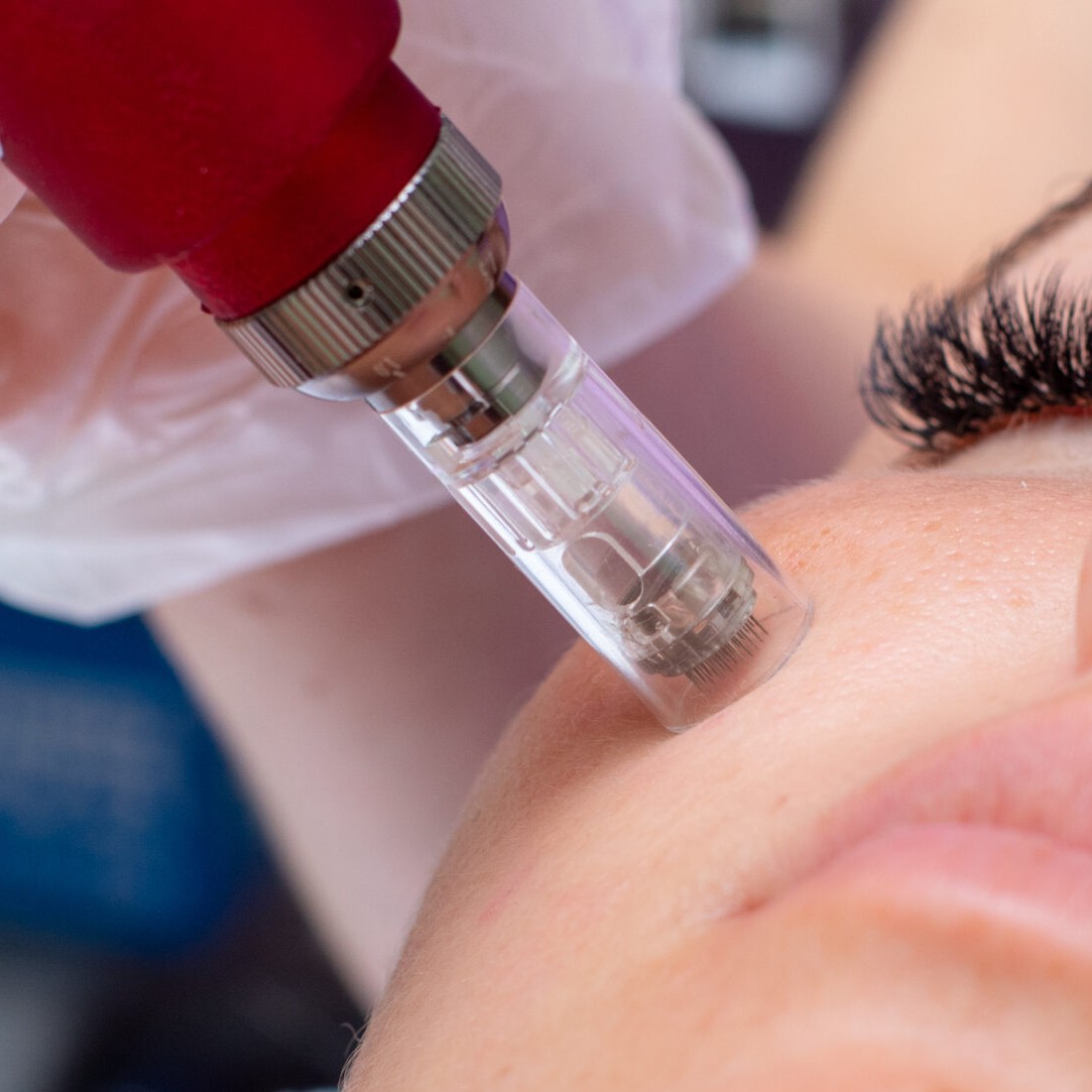

 What is microneedling and how does it work?


Call us: 01302 34 34 32
Email us: reception@elements.org.uk
Visit our Instagram
Visit our Facebook
Visit our TikTok
Contact us on WhatsApp